Diocesan News
The recent visit of Cardinal Mario Grech provided a unique opportunity for Catholics to deepen their understanding of synodality and its implications for the future of the Church.
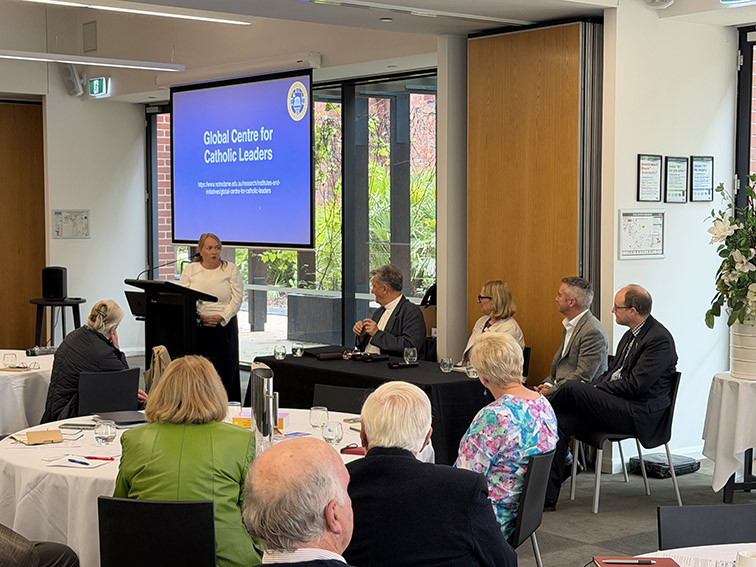
Hosted by the Global Centre for Catholic Leaders, the session on November 4 welcomed Cardinal Grech, Secretary General of the Synod, who shared insights into the global Synodal process and the ongoing call for the Church to become more participatory, missionary and collaborative. The session held in Melbourne was well attended by a Ballarat contingent.
Participants heard directly from the Cardinal and engaged in spiritual conversations, reflecting on the themes and experiences emerging from the Synod journey. The session also included opportunities for dialogue with Cardinal Grech and a panel of contributors, fostering rich discussion on some of the most important questions facing the Church today.
Among the topics explored were whether synodality is here to stay, what synodality means for leadership and governance, the formation needed to support a synodal Church, and how greater co-responsibility can be fostered within parishes, ministries and communities.
More than simply a presentation, the gathering was an interactive and prayerful experience. Through listening, reflection and conversation, participants were invited to consider how the principles of synodality can be lived more fully in local communities and diocesan structures.
The event proved to be a valuable and memorable experience for all who attended, offering a rare opportunity to engage with one of the Church’s leading voices on synodality and to contribute to an important conversation about the future of Catholic leadership, governance and mission.
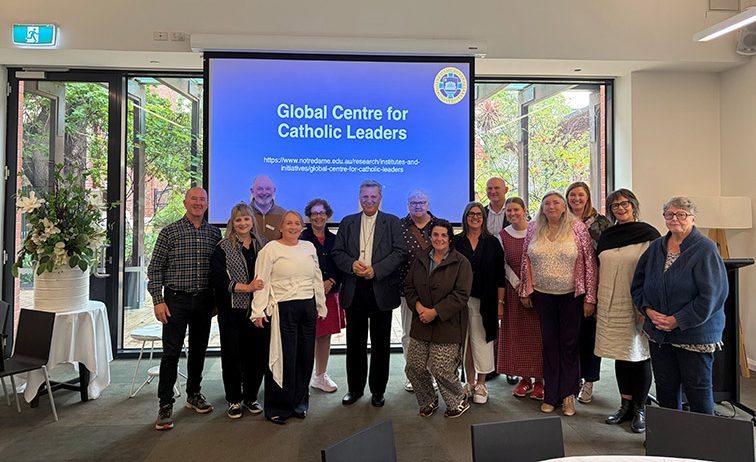
Some thoughts and highlights can be found below:
Cardinal Grech talked about the Synod and the phases of the process – Pope Francis’ vision for synodality
The document – “Recollecting: Accompanying the preparation of the local Church’s evaluation Assembly”, was brought to our attention and its focus is on helping dioceses reflect on and evaluate how they have implemented the Synod on Synodality at the local level
- A Spiritual Exercise
Evaluation is understood not as an administrative review, but as a process of gratitude, discernment and attentive listening to the Holy Spirit. - Remembering with Purpose
Recollecting involves more than looking back. It is about recognising God’s presence and action throughout the journey, discerning what has emerged, and identifying where God may be leading the Church next. - Reflecting on the Synodal Journey
Local Churches are invited to gather experiences, stories and insights that reveal the fruits, challenges and areas of growth arising from the implementation of synodality. - Preparing for Local Evaluation Assemblies
The document provides guidance for diocesan and eparchial assemblies that bring together the People of God to reflect, discern and evaluate their synodal experience. - Part of a Wider Journey
The local assemblies contribute to an ongoing process of reflection and discernment across the universal Church, strengthening communion, participation and mission. - Recollecting is not about measuring success or failure. It is about recognising what God has brought to maturity in the life of the Church, giving thanks for those fruits, and discerning the next steps with hope and trust.\
- We will have further follow up on this document in the near future.
Further insights from Cardinal Grech’s presentation –
Synodality: Communion, Collegiality & the Petrine Ministry – A Church Walking Together
- Communion of the People of God
- Synodality expresses the Church as a communion of all the baptised.
- Every member of the Church is called to listen, participate and contribute to the mission.
- Communion is rooted in shared faith, discernment and life in Christ.
- Collegiality of Bishops
- Bishops share responsibility for the life and mission of the Church.
- Collegiality is strengthened through listening to the People of God and one another.
- The bishop remains a shepherd who discerns and leads within a synodal Church.
- The Petrine Ministry
- The Pope, as Successor of Peter, is the visible source of unity in the Church.
- The Petrine ministry safeguards communion among local Churches and bishops.
- Synodality strengthens, rather than diminishes, the ministry of the Pope.
Synodality, episcopal collegiality and the Petrine ministry are not competing realities but complementary dimensions of the Church’s communion, participation and mission.
Synodality, Communion and a Culture of Encounter
From “I-It” to “I-Thou” (Martin Buber)
- Martin Buber distinguished between:
– “I-It”: relating to others as objects, roles, functions, or problems to solve.
– “I-Thou”: relating to others as persons through genuine encounter, dialogue and mutual respect. - Drawing on Buber’s insight, Cardinal Grech highlighted that synodality is fundamentally about fostering a culture of encounter.
- A synodal Church moves:
– from speaking about people to speaking with people;
– from consultation as an event to listening as a way of life;
– from individual opinions to communal discernment;
– from isolation and polarisation to communion and participation.
A Culture of Encounter
- Creates spaces where people can genuinely listen to one another.
- Recognises the dignity and gifts of every baptised person.
- Encourages openness to different experiences and perspectives.
- Builds relationships rooted in trust, respect and shared faith.
- Seeks the voice of the Holy Spirit through dialogue and discernment.
Hope
Cardinal Grech talked about hope – describes synodality as a journey of hope, trusting that the Holy Spirit continues to guide the Church.
- Catholic hope is not optimism or wishful thinking; it is confidence that God is present and active, even amid uncertainty and change.
- Synodality calls the Church to move beyond fear and discouragement.
- Hope enables the Church to listen deeply, discern courageously and embrace conversion.
- Through encounter, dialogue and participation, synodality becomes a sign of hope for both the Church and the wider world.
- A synodal Church trusts that every person has something to contribute to the mission and life of the Church.
Hope invites us to:
- Listen with openness.
- Walk together despite differences.
- Discern with confidence in the Holy Spirit.
- Act with courage for the sake of mission.
Cardinal Grech spoke about not being afraid to cross the bridge – we are not alone.
- Seeing synodality as an invitation to cross bridges rather than build walls.
- The future may be uncertain, but we are called to move forward with trust rather than fear.
- Hope gives us the courage to take the next step, even when the destination is not fully clear.
- Synodality invites us to cross bridges towards one another through listening, dialogue and encounter.
- We are not asked to make the journey alone; we walk together as the People of God, guided by the Holy Spirit.
- Communion strengthens us to move beyond fear, resistance and isolation.
- The Church’s journey is not simply about preserving what has been but discerning where God is leading us.