Diocesan News

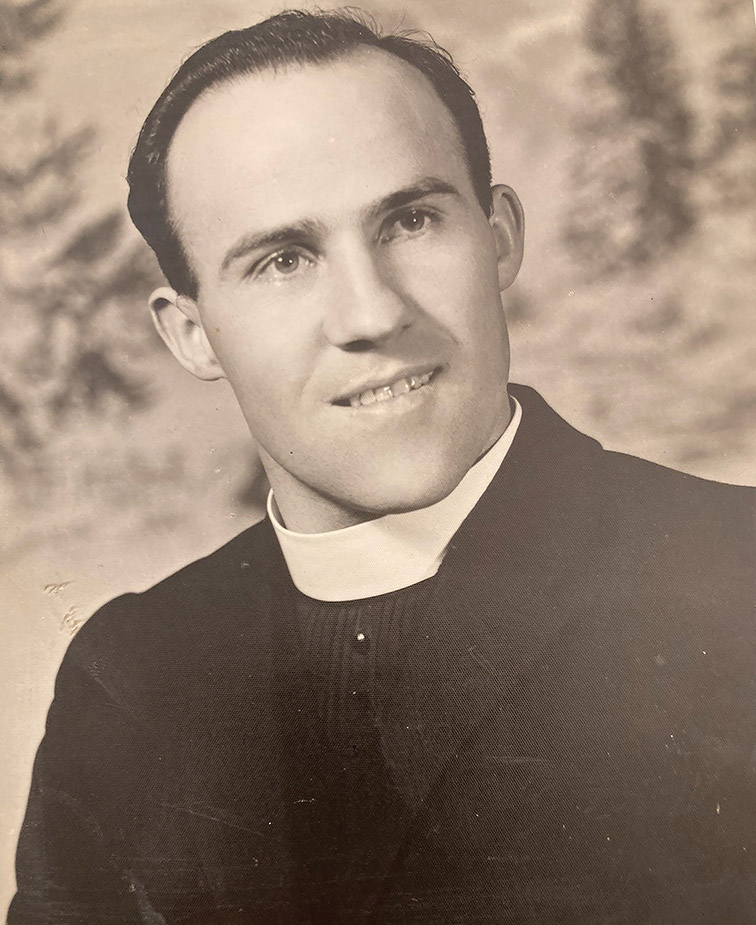
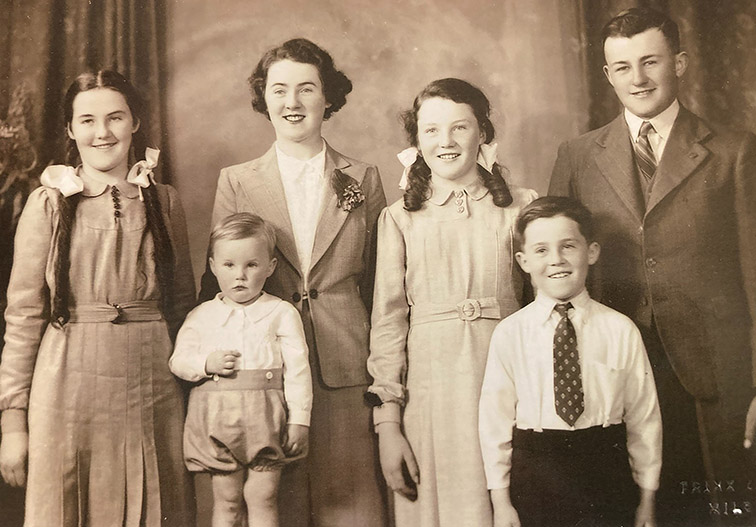
Born: January 18, 1934 in Mildura, Victoria
Ordained: Diocesan Priest on December 21, 1957 at Propaganda College Rome
Appointments:
August 1983 Chaplain to Nazareth House(in addition to those listed above)Retired: January 13, 2008
Entered Eternal Life: April 6, 2025 at Nazareth House, Ballarat
Funeral Mass: April 23, 2025 at St Patrick’s Cathedral Ballarat at 10.30am
Rite of Committal: Ballarat New Cemetery
A reflection from Fr John McKinnon – A priestly life well-lived:
Kevin Murphy died recently in Ballarat after sixty-seven years of priestly ministry in the diocese. He was ordained priest in Rome at the end of 1957, having studied theology there for four years. I am one of the few priests who have known him reasonably well over all those years. We were ordained just a few years before the Second Vatican Council, though our years together in Rome had prepared us for most of what was decided there at the Council. It was the time when the Lay Apostolate and Catechetics were coming into their own. Kevin took a keen interest in both.
Early in his priesthood he was made Diocesan Chaplain of the Young Christian Students Movement, and around the same time was also appointed Inspector of Schools in the Diocese.
Making the most of both appointments, to support the diocesan priests, he undertook the organisation of regular In-Service gatherings to explore both the decisions of the Vatican Council, and the fascinating developments taking place in the field of Religious Education. Those were exciting days.
In time, he was appointed Parish Priest of the Parish of Wendouree. Kevin was not afraid to be different. He built a mud-brick house in Invermay [I am not quite sure when], designing it so as to use as little artificial heating and cooling as needed; and endeavouring to be as careful as possible in his collection and use of fresh water. He invited a handful of interested parishioners to share with him in the project.
In later years, Kevin used a variety of means to educate interested lay people to keep abreast of current ideas and significant happenings in the Church — from shared meals and talks in a few local hotels in Ballarat [“Spirituality in the Pub”], to [if my memory is accurate] less frequent week-ends in the monastery at Wendouree. As he was growing older, he kept reading seriously, commenting and copying what he thought would be relevant information for others, and posting or emailing reviews or excerpts to those who showed interest.
Surprisingly, perhaps, behind all this lifetime of activity, Kevin remained a shy man who, nevertheless, held firmly to, and shared what he believed. May eternity be for him the experience of joy-filled fascination with the God who loves him infinitely.
[While endeavouring to keep this record as accurate as possible, I realise that my memory is becoming increasingly unreliable. JMcK.]
Tribute to Father Kevin Murphy from Maree Harris
As the people who have made a significant impact on my life die around me every year, I am left with a profound sadness, accompanied by an immense gratitude to have had them in my life. One of those people was Father Kevin Murphy. As I was not well on the day of his funeral, I could not be there to celebrate his life. I am therefore grateful for this opportunity to pay tribute to him here and share my memories of the contribution he made to the lives of so many in the Ballarat Diocese and further afield, as a priest, pastoral mentor, chaplain, religious educator, colleague and friend. For me he has had a profound impact on my life. He married Maurie and I and christened our three children. He was an inspiring presence.
It was when I was studying at Sacred Heart Teacher’s College at Patrician House in the late 1960s that I got to know Kevin well. While the college was long established as a training college for the Sisters of Mercy, Patrician House which housed the lay teachers was only in its second year. He was chaplain to the college and helped us establish the Catholic Teacher’s Movement there, grounded in the Cardijn See, Judge and Act process of the Young Christian Workers Movement (YCW). Many of us had come from small country communities or boarding schools with rather sheltered backgrounds. Kevin’s chaplaincy and leadership was experienced as quite revolutionary and was, for many of us, formative in shaping our social conscience and the way we approached the religious education of the children we taught. He saw we lay teachers as a new “powerhouse” in the Diocese. Kevin supported us to be that powerhouse, leading reflection on the potential of our role and connecting us with other lay organisations and individuals in the Diocese who were actively engaged in creating a church responsive to the modern world.
At this same time he was also chaplain to the Diocesan Young Christian Students Movement (YCS). Most groups were working out of schools at that time. Kevin wanted to see YCS groups established in parishes so that young people could participate more actively in the life of the church and share their vision for its future. As a leading chaplain in the YCS movement in Australia I understand he spoke convincingly to this idea when he attended the International Conference of the YCS in Montreal in 1968.
He had engaged me as his assistant to co-ordinate the YCS throughout the Diocese and together we made a significant impact. He supported the formation of a YCS Executive Team in the Diocese and we used both our cars to travel the Diocese in school holidays, with the students in tow, visiting parishes and facilitating discussions with student groups. Together under his leadership YCS in the diocese grew significantly. There were 12 groups in Ballarat alone at that time.
He drove me and a group of students to the National YCS Conference in Armidale, NSW in 1968, providing the students with the opportunity to see what other YCS groups were doing. The ideas he put forward at this conference about how student led movements should operate were accepted by chaplains and YCS groups around Australia and he was praised at the conference as being one of the best YCS chaplains in Australia. He had great rapport with the student executive and they valued him considerably given the verbal and written feedback they often contributed.
All of this was happening in the wake of Vatican II which brought a breath of fresh air into the church. It was a time of new ideas, liberation, hope and excitement. It became apparent that he, and a number of other like-minded priests in the Diocese, were ahead of their time, now given a license to speak the message that Vatican II had voiced. They were backed by a vibrant laity, also well ahead of their time, many of whom were members of the Adult Lay Apostolate Movement (ALA), the Catholic Student’s Movement, the YCW and the YCS whose lives were being transformed by Cardijn’s See, Judge and Act process. In fact, the Ballarat Diocese emerged as a leading diocese in Australia at that time in the promotion and involvement of the laity in the church through the influence of these movements. Kevin was, with other like-minded priests, one who helped create that reputation for the Diocese.
I actually first “met” Kevin when he visited my Form 5 classroom at Sacred Heart College as Inspector of Catholic Schools in the Diocese. It was in this role that he made a profound contribution to the way religious education was taught in the Diocese and in fact throughout Australia. Inspecting schools he visited Swan Hill and met Gary Eastman there. Gary had been influenced by a US religious education program called Witness based on life situation catechesis. After deep discussion with Gary about this program, Kevin decided to change his approach to religious education in the Diocese, and develop a less doctrinaire approach, an approach that was more life centred.
Cripac Press had not long been established in Ballarat by a group of lay people who were already reflecting on and discussing a new way of being Church. It had been established for the purpose of publishing the proceedings of the very successful Diocesan Christian Social Weeks of 1962 and 1964. Kevin persuaded Cripac to extend its purpose and develop material for religious education in the Diocese. Kevin and Gary Eastman developed these new programs. Kevin’s initiative here was groundbreaking. This became the religious education program called “Move Out”. It was big time. It was a new way of teaching religious education and a new way of designing and publishing it. No one had seen anything like it in Australia. It was embraced so strongly that at its high point 20,000 copies were being published and distributed to almost every Diocese in Australia. Teachers had been crying out for an approach and an accompanying resource that allowed them to reflect in their religious education classes the breath of fresh air that Vatican 2 had brought with it. Kevin provided that. I was on the planning committee for “Move Out” and it was such an exciting time. Cripac Press then went on to produce other material in the religious education area. Gary Eastman later established John Garrett Publishing producing a wide range of religious books.
On Kevin’s 70th birthday, I invited him to lunch at our house in Ballarat with all those people who were part of that exciting time – members of Cripac Press, the Diocesan ALA, chaplains, and people who had interacted with Kevin in a never-ending array of groups that he had initiated. Many of these had not seen Kevin for many years. What started as a small group of 15, ended up, as people heard about it and wanted to come, being a group of more that 30. I never saw the sense in celebrating someone’s life and telling them what an impact they had made, after they had died. This was an opportunity to tell Kevin how important he was to all of us. I had to work very hard to get him to be part of this. He never handled praise well. He did however find it very rewarding and graciously accepted the moving tributes from people as to the impact he had on their lives.
Kevin was an educator and a teacher in essence, fascinated by learning and being a learner himself. After finishing as Diocesan Inspector of Schools and his initiatives in designing religious education programs for schools and his chaplaincy with Catholic lay teachers, he moved into adult education.
He was on the planning committee of the first Catholic adult education conference in Australia in 1993 which I chaired. Fr Pat Crudden from Melbourne and David Shinnick from Adelaide were also on that committee. Bishop Frank Carroll, Australian Bishops Council chair of education, was also present at that event, as were a number of members of the Australian Council of Churches engaged in adult education. Following that event we published a newsletter on adult education for a number of years.
He produced a printed newsletter at one stage in conjunction with the religious education office. Many people will remember his own email newsletter which he wrote for many years, his way of providing thoughtful reflection on theology and the church. He facilitated so many discussion groups over the years. The most controversial was one on Humane Vitae together with Dr Gerald Caine back in the early 1960s, a very courageous act, to question a doctrine of the church, and be a voice, as a celibate priest, providing an opportunity for Catholic couples to ask questions about a “doctrine” of the church that would profoundly impact their relationships regarding birth control. Later he had groups discussions about small Christian communities. Then there were his Spirituality in the Pub discussion groups.
He met with one group of men once a month for ten years reading books that drew on new directions in theology, with him facilitating the reflection of the group. One of the men in that group, Jim Ross, summed up the way Kevin related in that group, and all of us who have been in groups with Kevin have experienced this also – “He never assumed to know more than us just because he had studied in Rome. He listened to us who had no theology degree, in fact, we had barely got past the Our Father when we started learning with him. He engaged with differences of opinions and accepted arguments. He worked with us taking us on a journey of discovery. The result of that was that he learned too. That was what made him so important. Few priests were engaging that way at the time.”
Kevin created so many opportunities for people to discuss issues of religion, theology and church. He drew to him people who wanted to search, who were on a journey of discovery. Those who wanted to question and reflect. He gave people permission to do that, to ask questions and he enhanced their discernment and motivated their reflection. It was always done in a spirit of searching for truth and meaning.
But while Kevin was valued by so many, there were others in the Diocese who saw him as too controversial, even doctrinally unsound. He was on a number of occasions moved from places where he was making an impact to places where his impact would be reduced. One of these times that caused me great sadness was him being moved to Apollo Bay, and replaced as chaplain to the YCS, at a time when the YCS was about to bring students together for its first Diocesan conference. After all he had done to advance the YCS and the presence of students in the life of their parishes, he was not able to celebrate this with them. While these moves must have caused him deep hurt he never showed it, nor made an issue of it. This was an extraordinary measure of the person he was. In spite of this, he was very loyal to the church even while saddened by what has happened in recent times. While his priestly colleagues were leaving the priesthood, there was never any sense that he also would go.
Kevin’s life was inspired by the Gospel. It was guided by “What would Jesus have done?”, rather than “What does the church and its doctrines tell me to do here?” Those who do that are still seen to be controversial even today because what Jesus would have done was often in stark contrast to what the church says should be done. And Kevin never assumed he knew what Jesus would have done. He just asked the question, and helped us turn to the gospel and reflect in deciding what we ourselves would do. That saw him often in conflict with others who tended to put Church doctrine before what Jesus would have done. It’s the same criticism made of Pope Francis, that he was too pastoral and not doctrinal enough.
Kevin also did not support clericalism. He must have found validation when Pope Francis also spoke against clericalism. It was also what made Kevin such a good chaplain to the lay apostolate movement. He was strongly committed to providing opportunities for the whole church – laity and religious – to participate in discussing issues relating to Catholic life and Catholic culture.
In fact, there were other similarities between the attitudes of Pope Francis and Kevin. Just as Francis chose not to live in the Apostolic Palace, but in a humble hostel, Kevin later in his priesthood chose to move out of the presbytery and as the environmentalist that he was, (which many wouldn’t have known about), built a mud brick house at Slatey Creek and lived there for many years. He then moved into a house in Lyons Street, Ballarat, and among many other things grew vegetables and enjoyed cooking them for people who came to eat with him. Having just finished reading a book on Pope Francis there are significant similarities in their attitudes to church and the people of God who belong to it.
There are so many stories out there from far too many people to mention that speak of their experience of Kevin as educator, visionary, learner, listener, explorer and sharer of wisdom that he was. He had an impact on so many. In our uncertain world the ability to get people to reflect via asking questions is a key leadership skill in the development of people, in lay apostolate terms, we would say “in the formation of people”. Kevin was way ahead of the times.
Kevin is no longer with us. His legacy lies not in any physical structure named after him or a book written about him. What he has left behind lies in the hearts and minds of so many people whose lives were transformed by their engagement with him. The disability he experienced in his later years has left him. He is now in a place with believers like Pope Francis, and so many others who shared his way of being and knowing. I have no doubt that he has found affirmation and peace in a heaven and with a God that has embraced him.
Maree Harris