Diocesan News
A Mass was held in honour of a movement that inspired generations of young people to live out their faith with courage and conviction in everyday life.
The Young Christian Workers (YCW) movement played a transformative role in the lives of working-class youth across the Ballarat Diocese, particularly during times when access to formal education and social support was limited — especially in rural communities. For many young people who left school early to enter the workforce, YCW offered more than just faith formation. It provided leadership opportunities, practical support, a sense of belonging and lifelong friendships.
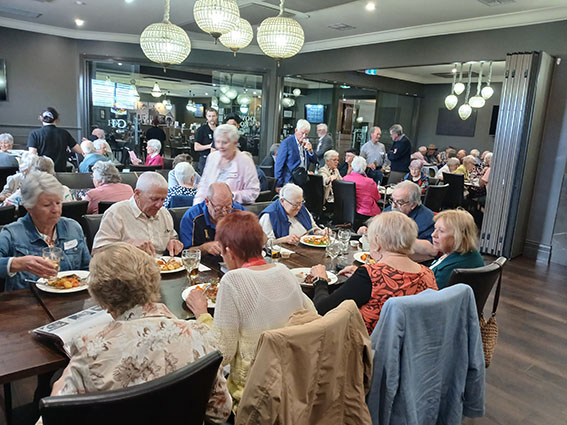
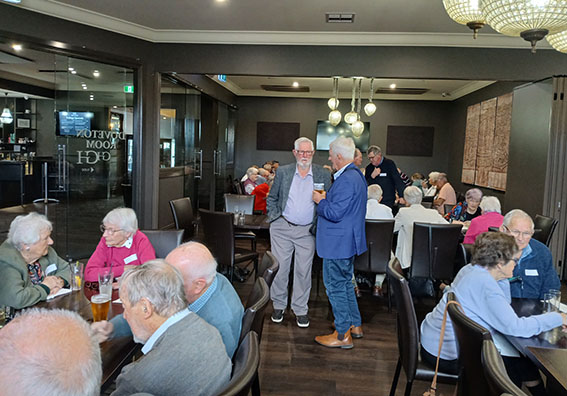
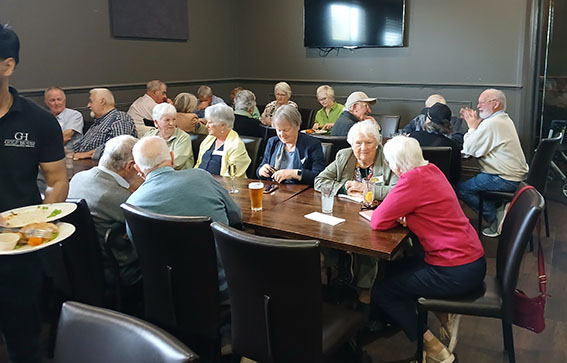
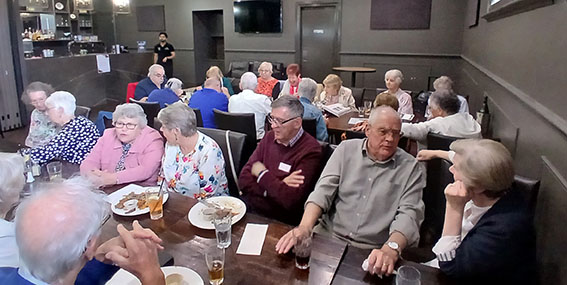
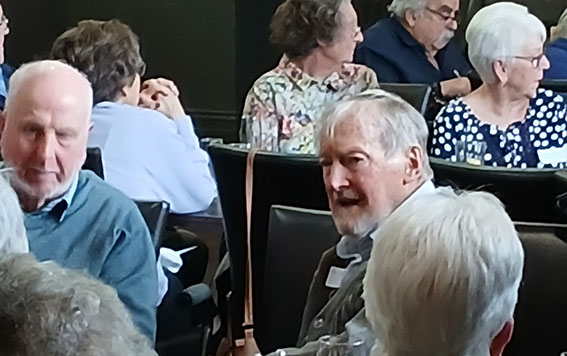
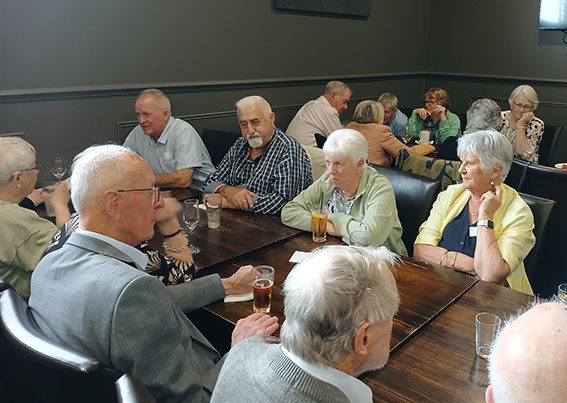
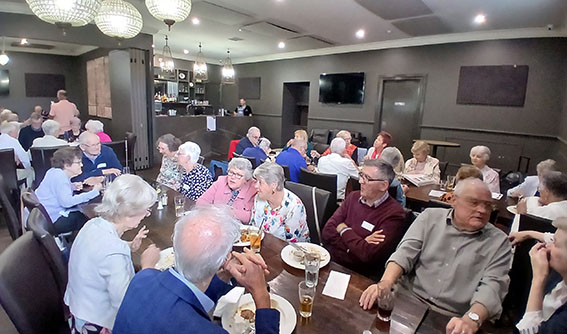
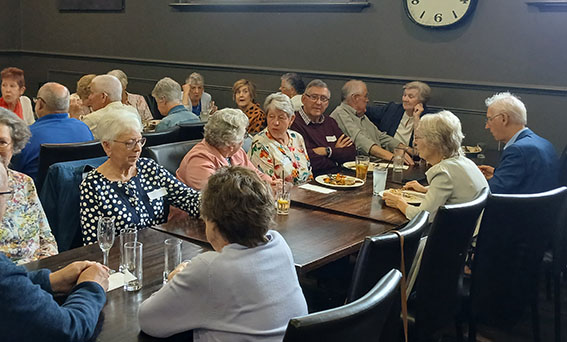
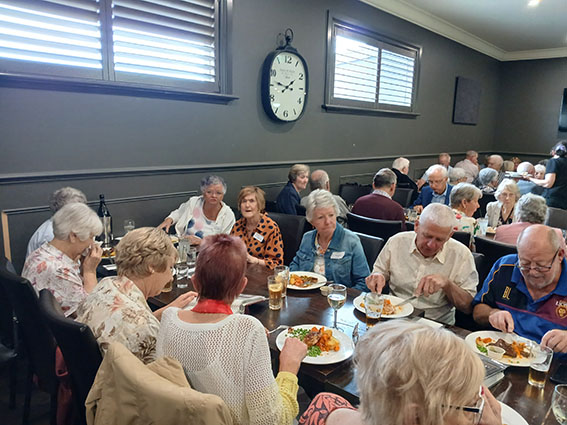
In recognition of 100 years since Cardinal Joseph Cardijn began the Young Christian Workers movement, Mass was celebrated by Fr Rupert Bowd on Sunday, October 19, 2025 at St Columba’s Church in Ballarat North. Lunch followed at the Golf House Hotel with around one hundred and five people in attendance.
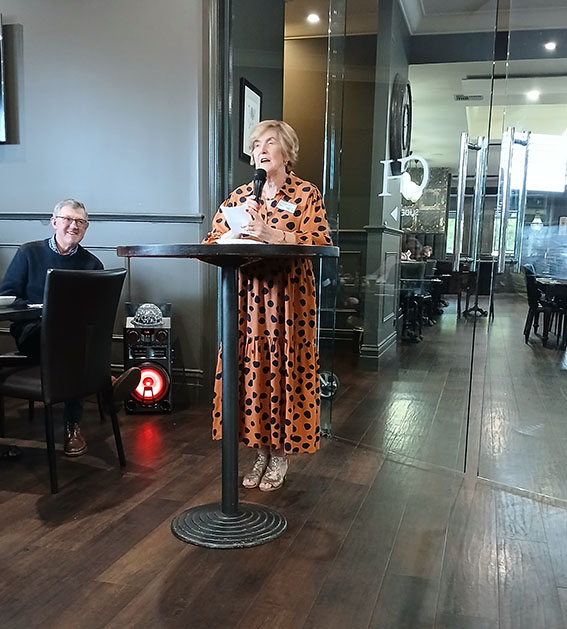
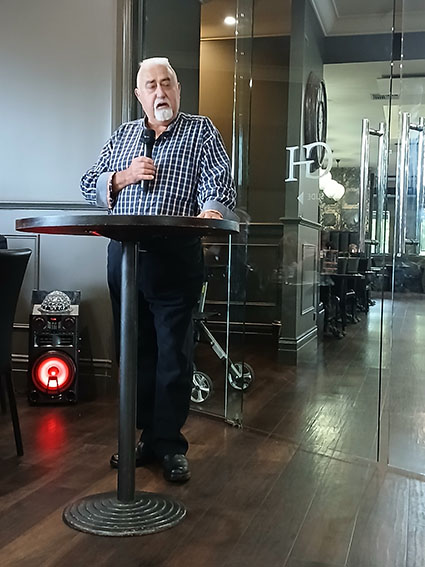
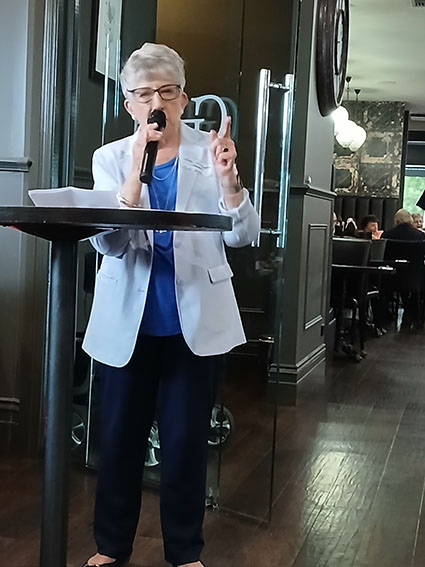
Four former YCW full time workers shared reflections on their involvement over lunch. These included Leni Livingston, Diocesan President; Colleen Wakefield, Diocesan President; Colin Lynch, fulltime worker in the Southwest Region; and Brendan Murphy, YCW Extension worker in New Guinea. It was a truly successful day, filled with lively conversation that never seemed to end.
Colleen Wakefield shared the following:
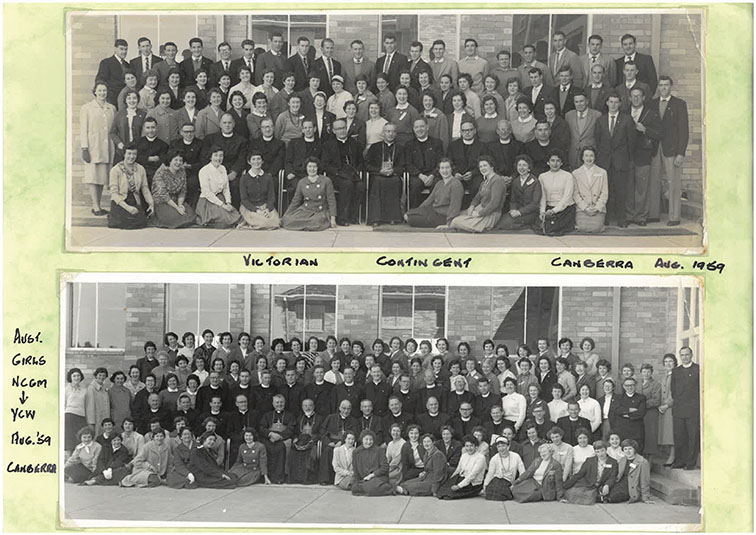
In 1968 I agreed to work fulltime for the YCW movement in the Ballarat Diocese as the Girls President. At that time, Corrie Ruyg was Diocesan Secretary with Fr Laurie Halloran as Diocesan Chaplain. Jim Moran was the Boys Diocesan President and John Gannon was the Diocesan Secretary with Fr John McKinnon as the Boys Diocesan Chaplain.
I began my working life in administration at the Queen Elizabeth Home while being a member of the Cathedral group. During that time, I helped establish a new group with nurses at the Queen Elizabeth Home, with the late Barry Ryan serving as Chaplain.
In 1968 we had twenty-four girl leader groups in the Ballarat Diocese. We also had the benefit of a car for visitation around the Diocese. The boys also boasted twenty-four leader groups.
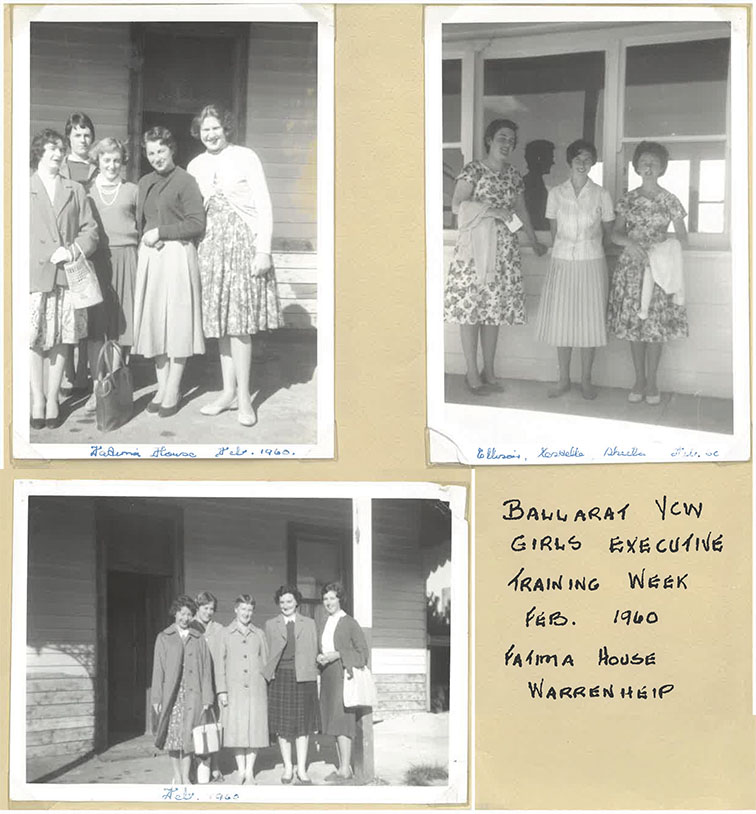
Our office was upstairs at 44 Sturt Street and our weekly executive meetings were held there. The full time workers, along with the executive members, organised alternate training weekends at Fatima House. Fatima House was the delicensed hotel at Warrenheip.
On reflection, now, I considered myself to be young for the role. However, the words of Cardijn were always implanted in my thinking – See, Judge, Act. Cardijn words were “You are lay-people, young workers, engaged couples – tomorrow fathers, wives and mothers. It is not a question in the factory of having a rosary or a missal in one’s hands. In the factory the tools of the job are in one’s hands”.
Visiting groups across the Diocese required a great deal of effort, whether in workplaces or around the towns. For example, the Ballarat North group dedicated significant time and energy to successfully installing streetlights along Lydiard Street. They worked closely with the Ballarat City Council to make this happen. Regional sports days were organised, finishing off with a dance at night.
Lifelong friendships were formed, but eventually the movement came to an end for various reasons. I remain deeply grateful for the experience—it prepared me well for working in a factory environment for 30 years after returning to Ballarat in the late 1970s. This was just one of the many benefits.
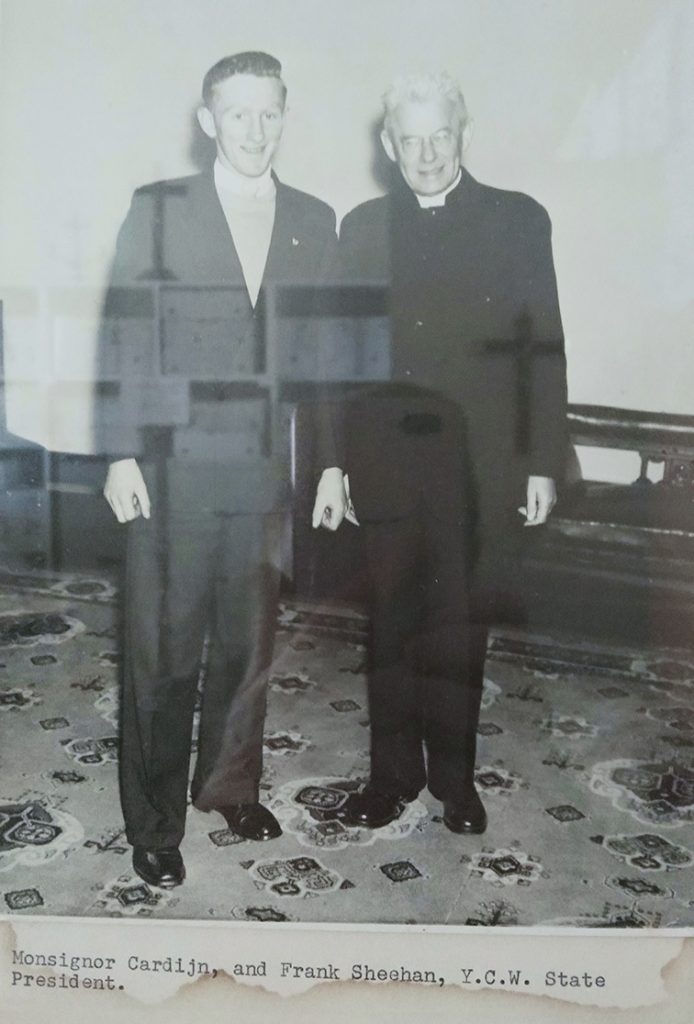
Remembering Cardijn – Fr John McKinnon’s homily
The widow in this morning’s Gospel wanted justice – (as she said to the unjust judge:)
“I want justice from you against my enemy.”
People generally are concerned about justice.
But what they have in mind is often
a justice that does not satisfy…
that too often focuses only on the size of the slices of cake.
Today we are here remembering Joseph Cardijn and the Young Christian Workers movements that he started one hundred years ago. The workers of Cardijn’s time were oppressed by powerful wealthy elites…and the workers’ response was largely a violent response. Cardijn, and the Movements he started, were concerned about justice, too, but they saw justice differently: Cardijn saw justice inseparably connected with the radical dignity of every human person; and he saw that dignity of the person flowing from the unique love that Christ has for them… for every human person. No one is an enemy. What society needed would flow from a faith-enlightened sense of each person’s dignity…. This morning’s Gospel concluded with Jesus wondering: “When the Son of Man comes, will he find any faith on earth?” Cardijn’s answer was “Yes!” The Movement he started was a Young Christian Workers movement.
As I thought this week about Cardijn, I thought with gratitude, too, of our own diocese’s Cardijn equivalents: Fr John Molony and Fr Vin Fennelly, of 65 years ago (or so). They both saw clearly the priority of faith in approaching all work for justice. Following Cardijn, they saw the importance of the Gospel as the basis of that faith vision. For them, the Gospel Discussion was the heart of every YCW meeting. It was the heart of the “See. Judge. Act” technique. On the Gospel Discussion was based the YCW members’ deep sense of the “what” and the “why” of all fruitful work for justice.
Due largely to the work of both John and Vin, the Ballarat Diocese’s YCW’s leaders became the envy of many of the other dioceses around Australia;… and many of us here today are the heirs of their labours. But then, it seemed, the wheels fell off! Despite the hard work, especially of the full-time workers, the wells dried up…young people lost what interest they had previously had, and groups folded up as individuals found their interests and desires met elsewhere. And we did not know what to do!
What was happening here in the diocese with the Youth Movements had already been happening within the Church as a whole… The renewal that many priests and many parishioners had hoped for from the Second Vatican Council did not eventuate…. And now? The world has changed. The culture in general has changed. Many of us have grown old and our energies have evaporated. As we look back, we can be tempted to ask: “Was all that work worth it?” Perhaps even: “Was all that prayer worth it?”
In some ways, that had become a frequent lament, too, of the Hebrew prophets of the Old Testament,
and God constantly needed to give them hope. Did things ever really pick up? Jesus himself, the Son of God, finally came on the scene. People could not get enough of him at the start of his ministry. Yet, within three years, the same people, and others, were caught up into the familiar pattern of their predecessors, and were crying out: “Crucify him! Crucify him!” The old pattern once more. Then…totally unexpectedly, within three days, he had risen. And fifty days later, the Holy Spirit was poured out into the world. Peter and Paul, and a number of other disciples, were filled with that Spirit and the Church was born.
It was not long, however, before the initial excitement ran into unanticipated problems … and the pattern of death/resurrection has continued in the Church across the centuries until today.
Is hope, based on the mystery of death/resurrection, a convincing enough precedent not only to quieten our concerns, but to be our hope today? Jesus knows that we shall be tempted, but He confidently insists that we not let ourselves be discouraged: “When the Son of Man comes, will he find any faith on earth?”
Is what was good enough for Jesus, convincing enough for us? It was certainly good enough for Joseph Cardijn one hundred years ago. And it is the challenge that faces us, and our Church, today, one hundred years after Cardijn: Shall we, too, like Cardijn, choose to live in faith? to come alive in faith? to see our world through the eyes of faith…? then once more … to carry on with an ever deeper faith?