

Diocesan News
The Vatican has published a document focused on caring for creation and for human life within the family.
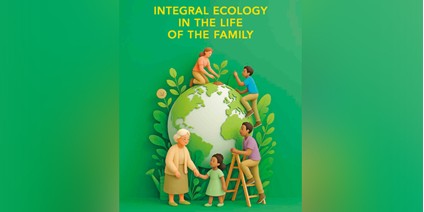
Integral Ecology in the Life of the Family
Dicastery for Promoting Integral Human Development & Dicastery for Laity, Family and Life (2025)
Integral Ecology in the Life of the Family highlights the vital role families play in caring for our common home. Shaped by Laudato Si’ and Amoris Laetitia, the document affirms the family as the first place where values of care, responsibility and solidarity are learned and lived.
It invites families to see everyday choices—how we live, consume, pray, work and relate to others—as part of a wider response to the ecological and social challenges of our time.
Through simple, faith‑filled practices and participation in community life, families are encouraged to become agents of ecological conversion and hope, helping to build a more just, sustainable, and compassionate world.
Purpose of the Document
- To show how the Church’s teaching on integral ecology, particularly from Laudato Si’ and Laudate Deum, can be lived concretely within family life.
- To affirm the family as the primary agent of integral ecology, formation, and cultural change.
- To provide theological foundations, practical reflections, and concrete actions for families.
Key Theological Foundations (Part I)
Integral Ecology
- Integral ecology recognises that human life, social life, economics, culture, spirituality, and the environment are interconnected.
- Care for creation cannot be separated from care for people, especially the poor and vulnerable.
- The ecological crisis is rooted in broken relationships: with God, one another, and creation.
The Family’s Central Role
- The family is described as:
- The first cell of society
- A school of communion, virtue and responsibility
- A privileged place where faith, values, and habits are transmitted
- Families nurture:
- Respect for life
- Simplicity and moderation
- Solidarity across generations
- Responsibility for the common good
Magisterial Sources
The document draws heavily on:
- Laudato Si’ – care for our common home
- Fratelli Tutti – fraternity and social friendship
- Amoris Laetitia – marriage and family life
- Gaudete et Exsultate – holiness in everyday life
- Laudate Deum – urgent action and commitment “from below”
Seven Key Themes for Living Integral Ecology (Part II)
Each theme includes explanation, implications, reflection questions and proposed actions.
1. Listening to the Cry of the Earth
- Environmental degradation harms both nature and people, especially the poor.
- Families can foster awareness, sustainability and responsible use of resources.
2. Listening to the Cry of the Poor and Vulnerable
- Integral ecology requires defending human dignity at all stages of life.
- Poverty, exploitation, addiction, displacement and exclusion are ecological issues.
- Families are called to solidarity, hospitality and concrete acts of care.
3. Adopting and Promoting Ecological Economics
- Critique of the “throwaway culture” and profit-driven systems.
- Families are key economic agents through consumption, work patterns, and investment choices.
- Emphasis on fair work, ethical consumption and balancing work and family life.
4. Adopting Ecological Lifestyles
- Promotion of simplicity, moderation, gratitude, and responsible use of time.
- Encourages discernment between needs and wants.
- Everyday family habits shape culture and ecological awareness.
5. Integral Ecology and Education
- Parents have a primary role in ecological and moral education.
- Education must be integral: intellectual, moral, spiritual, social.
- Children learn ecological responsibility through example, dialogue, and practice.
6. Ecological Spirituality in the Family
- Calls for ecological conversion grounded in faith and prayer.
- Creation is a place of encounter with God.
- Family prayer, sacramental life, and contemplation nurture hope, care and responsibility.
7. Families Participating in Community Life
- Families are called to active participation in parish, civic and social life.
- Through networks, associations and advocacy, families help shape just and sustainable communities.
- Encourages synodal styles of listening, cooperation and shared decision-making.
Conclusion and Key Message
- Families are agents of cultural transformation “from below.”
- Small daily choices, when lived consistently, contribute to large structural change.
- Integral ecology begins in the home and extends to society and public life.
- The younger generations urgently call families to model hope, responsibility and care for the common home.
Appendix: Laudato Si’ Action Platform for Families
- Offers structured guidance, assessment tools and resources.
- Encourages families to create a concrete ecological action plan.
- Promotes shared learning, accountability and community connection.