Diocesan News
From Bishop Paul Bird CSsR:
On Sunday October 11, I went along to a gathering devoted to building peace. It was called a “Peace Summit” and brought together members of state and local governments, community organisations, including women’s groups and youth groups, cultural and religious associations, and people working in education. The aim was to promote peace through dialogue and cooperation between people at all levels of society.
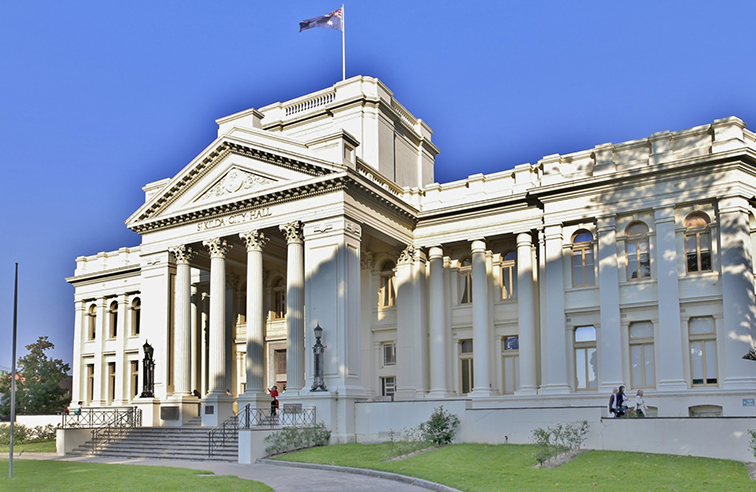
The event was hosted by the St Kilda local council and held at the St Kilda Town Hall. The program was organised by a group with the fulsome title of “Heavenly Culture, World Peace, Restoration of Light”. This is a group that started in South Korea and describes itself as “an international peace non-government organisation founded for global peace and cessation of war”. I was aware that there had been criticism of this group as being linked with a South Korean church with some unorthodox teachings. However, I was interested in the focus on peace and decided to go along to see for myself.
I found that the gathering did bring together people of diverse backgrounds with a common desire for peace and a readiness to share their thoughts about fostering peace at the local level as well as at the international level.
The first part of the program had several hundred people gathered in the main auditorium of the town hall, sitting at desks, rather like the arrangement at the general assembly of the United Nations. We were welcomed by a local Aboriginal Elder and then by the Mayor of the City of Port Phillip. We heard from members of the Victorian Parliament – both Labor and Liberal. We heard from a diplomatic representative from Sudan who spoke of the challenges of bringing peace in a war-torn country. We heard from people involved in Human Rights Committees in Australia. The session concluded with a photo of those gathered.
In the second part of the program, people met in separate rooms to discuss particular topics. One group addressed issues of international law and shared ideas for promoting peace through education. Another group focussed on ways in which women could be agents of peace. The group that I joined looked at opportunities for young people to promote peace and how peace could be fostered through dialogue between people of different religious beliefs.
The third part of the program was an evening meal, when we gathered again in the main auditorium, but this time at round tables to share a buffet dinner. I was seated with some university students who are members of Amnesty International, advocating for human rights. During the meal, as well as the conversations at the tables, we heard some brief talks on efforts to bring peace to some of the troubled spots around the world. We also had music and dancing from various ethnic groups, from India, Eritrea, Thailand, Papua New Guinea, and Malaysia.
It was good to see the appreciation for the different cultures and the encouragement to listen carefully to one another during the discussions. The emphasis on listening reminded me of the approach we have taken in recent years in meetings in our Catholic community – at our diocesan assembly and at the synod in Rome. The peace summit encouraged “reflective listening”, giving the speaker our full attention, reflecting on their message and the feelings they are sharing, and giving an appropriate response, perhaps asking clarifying questions and acknowledging what they have shared. This was a good approach in the discussions about peace. It would be a good approach in any discussions we might have.
The peace summit brought home to me that we have a rich understanding of peace in our own Catholic tradition. In preparation for attending the summit, I looked back on what our Catholic community has said about peace through the years.
The message of peace has been with us from the beginning. At the birth of Jesus, the angels sang “Glory to God in the highest and on earth peace.” After his resurrection, Jesus greeted his disciples with the words, “Peace be with you.”
Later teachers in the Church have helped us to understand the meaning of peace. St Augustine referred to peace as “the tranquillity of order”, highlighting the fact that peace involves a right order of relationships between people. In the same vein, St Augustine linked peace with justice. “Do you wish to attain peace? Then practise justice!”
Closer to our own times, we have the teaching of recent popes. In 1963, Pope John XXIII issued an encyclical entitled “Peace on earth”. In 1965, Pope Paul VI addressed the United Nations, pleading that there should be “No more war!” In 1986, Pope John Paul II met with leaders of world religions in Assisi to pray together for peace. In 2020, Pope Francis called on people throughout the world to see themselves as “brothers and sisters all”. On October 27, Pope Leo is due to join leaders of world religions in Assisi for renewed prayers for peace.
I was pleased to take part in the peace summit in St Kilda Town Hall and see so many people interested in promoting peace. I am also grateful that this event prompted me to appreciate more fully the riches of our Catholic teaching on peace.